

Distribution Transformer vs Substation Transformer: Voltage Class and Application Differences — XIAOWEI
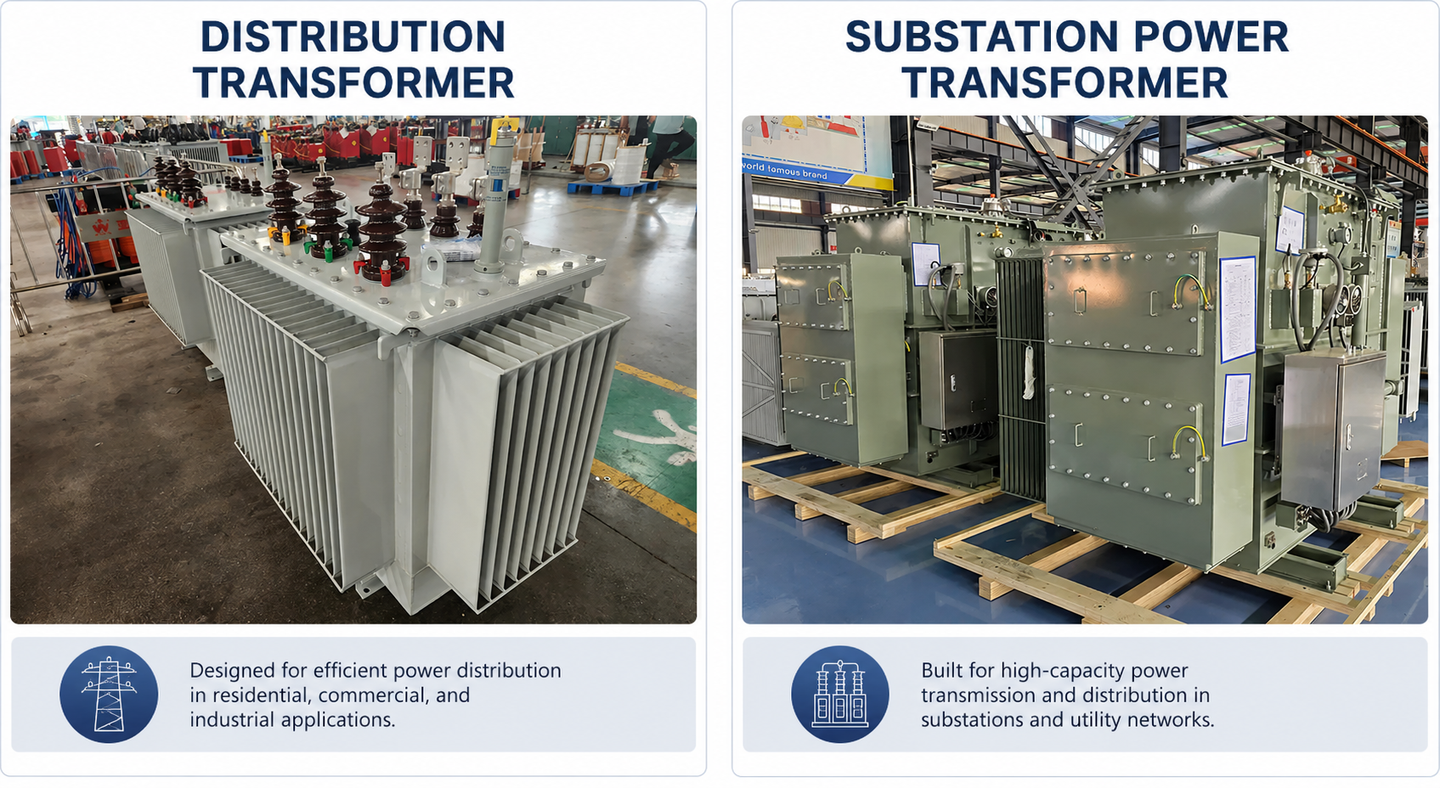
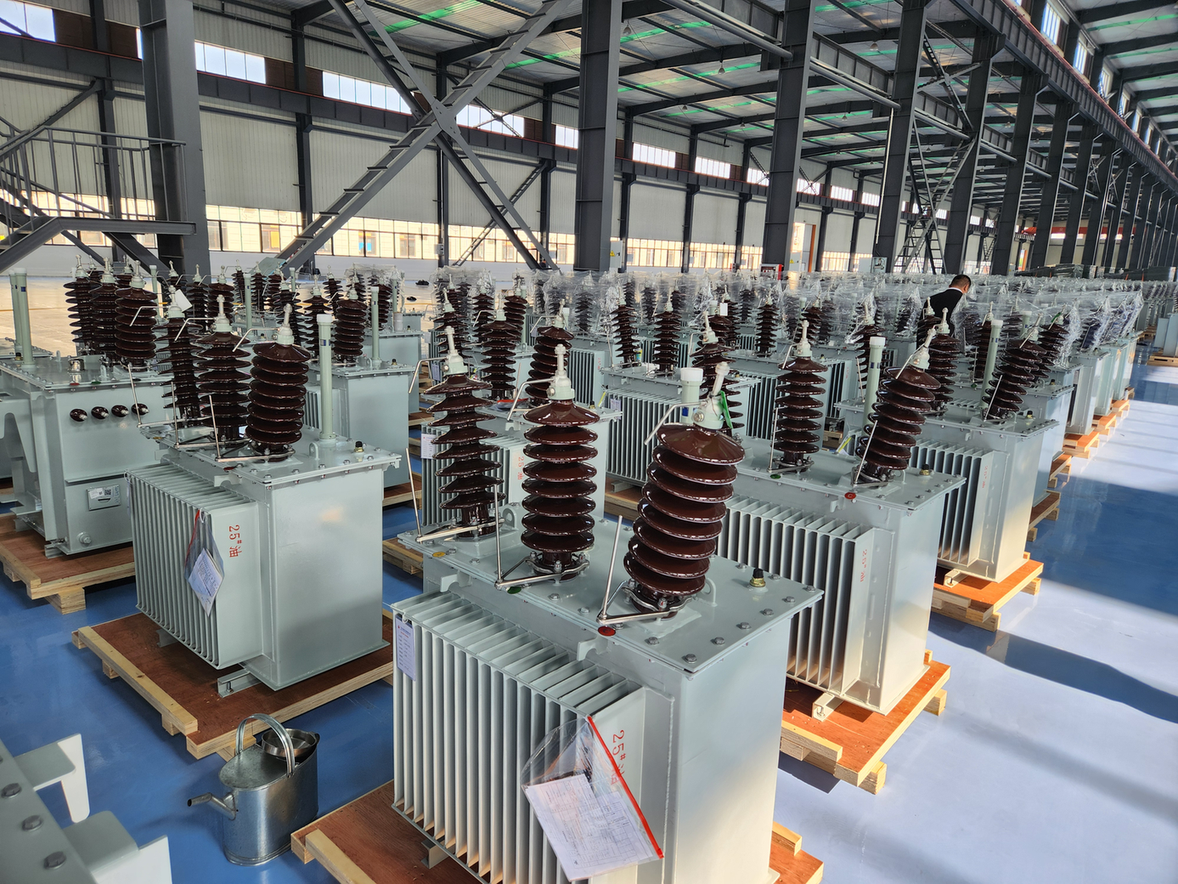
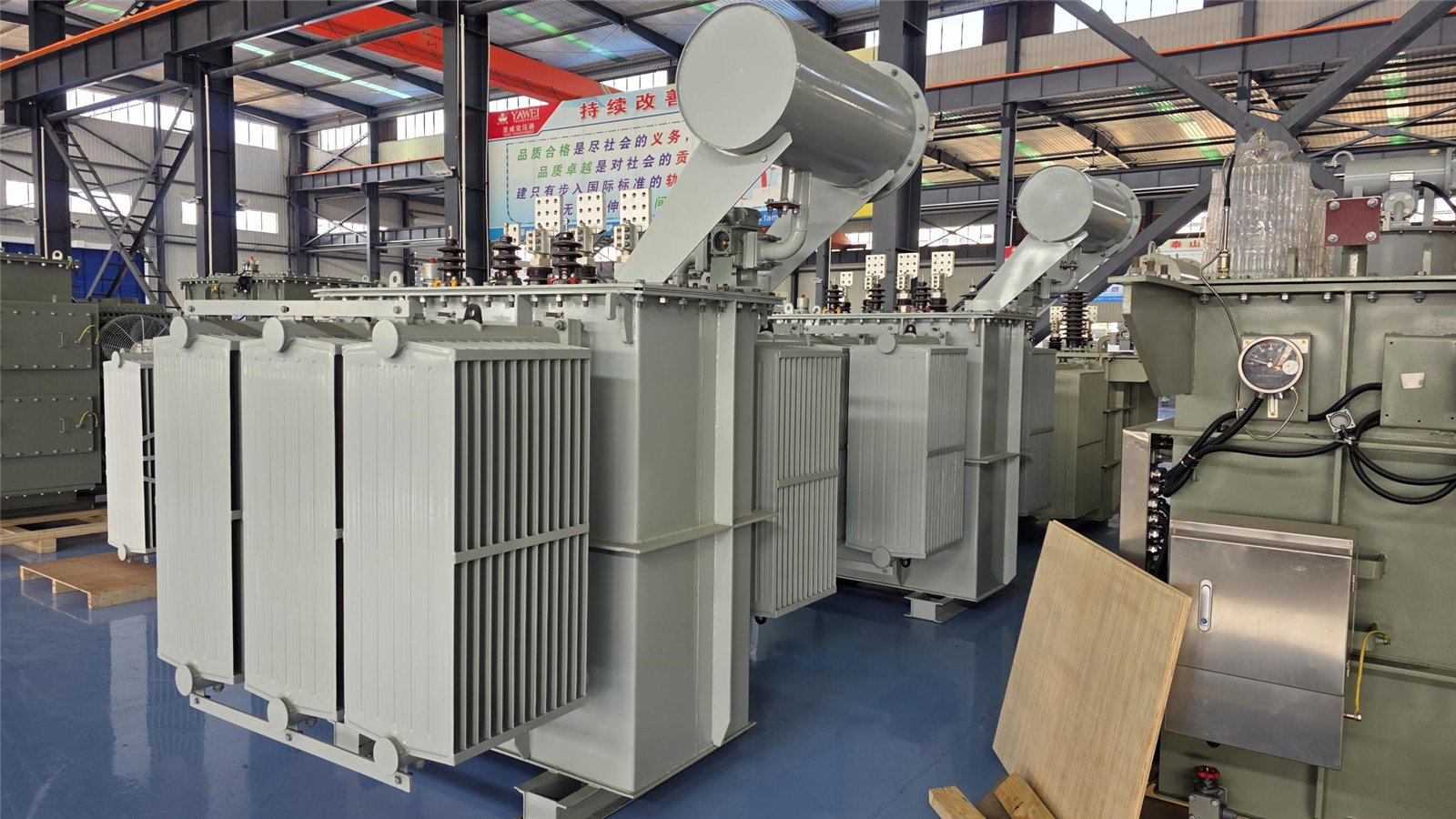
Distinguishing distribution transformers from substation transformers requires examining operating MVA capacity, primary voltage class, tap changer regulation mechanisms, and protective relaying infrastructure. Manufacturing capabilities at XIAOWEI provide EPC contractors, electrical utility engineers, and substation procurement managers with four primary comparison parameters:
Voltage Class Spectrum and Megavolt-Ampere Power Ratings: Comparing distribution units rated from 50kVA to 5000kVA up to 35kV against flagship substation power transformers rated from 5MVA to 100MVA or higher up to 110kV and 230kV.
Voltage Regulation Mechanics: DETC vs On-Load Tap Changers: Evaluating de-energized tap changers (DETC) on distribution units against automated on-load tap changers (OLTC) with automatic voltage regulators.
Cooling Infrastructure and Thermal Dissipation Mechanics: Analyzing natural oil convection (ONAN) corrugated tanks on distribution units against forced-air fan arrays (ONAF) on substation power transformers.
Protection Relaying, Auxiliary Monitoring, and Grid Topology: Weighing compact distribution protection against Buchholz gas relays, oil conservator tanks, and differential protection on main substation transformers.
Voltage Class Spectrum and Megavolt-Ampere Power Ratings
Electrical power systems are structured into primary high-voltage transmission networks, sub-transmission grids, and localized distribution feeders. Distribution transformers serve at the final stage of the power delivery chain, stepping down medium primary voltages (such as 35kV, 22.9kV, 13.8kV, 12.47kV, or 10kV) to low utilization voltages including 480Y/277V, 208Y/120V, or 400V. XIAOWEI manufactures three-phase distribution transformers in power capacities ranging from 50kVA up to 5000kVA (such as standard 500kVA 22.9kV/0.4kV step-down units), designed for pole-mounted, pad-mounted, or compact indoor vault installations.
Conversely, substation transformers operate at primary utility substations or heavy industrial bulk power nodes, stepping down high-voltage transmission lines (such as 230kV, 110kV, 69kV, or 35kV) to sub-transmission or distribution feeder levels. Serving as XIAOWEI's flagship product line engineered in compliance with ANSI, IEEE, CSA, IEC, EN, and AS/NZS global standards, substation transformers deliver substantially higher power capacities ranging from 5MVA up to 100MVA or higher. These heavy MVA units handle massive continuous energy throughput, interconnecting regional transmission grids and supplying power to entire industrial parks or municipal utility feeder networks.
Voltage Regulation Mechanics: DETC vs On-Load Tap Changers
Maintaining stable secondary output voltage across fluctuating grid loads requires effective tap changer regulation mechanisms. Distribution transformers typically utilize manual De-Energized Tap Changers (DETC) positioned on the high-voltage primary winding. XIAOWEI distribution units feature DETC switches offering ±2x2.5% voltage adjustment steps, requiring field technicians to de-energize the unit before manually adjusting tap positions to compensate for long-term seasonal feeder voltage drift. This design prioritizes simplicity and long-term reliability for standard residential and small commercial distribution nodes.
In contrast, main substation power transformers must continuously regulate busbar voltage under dynamic, real-time load changes without interrupting electrical service to downstream customers. XIAOWEI equips substation transformers with motorized On-Load Tap Changers (OLTC) integrated with digital Automatic Voltage Regulators (AVR). The OLTC mechanism adjusts winding tap ratios dynamically while under full load current, maintaining steady secondary distribution voltage despite severe primary transmission line fluctuations. Advanced digital controller integration allows for precise voltage control, reducing harmonic distortion and protecting sensitive industrial equipment connected to the secondary busbar. This technology is vital for maintaining network stability in regions experiencing significant renewable energy penetration or varying industrial load profiles throughout the day.
Cooling Infrastructure and Advanced Thermal Dissipation
Thermal dissipation requirements scale non-linearly with transformer MVA capacity, dielectric fluid volume, and internal core-and-coil mass. Distribution transformers dissipate thermal energy primarily through natural oil convection and natural air cooling (ONAN). XIAOWEI constructs distribution transformers using fully sealed corrugated steel tanks—chemically phosphated and coated to resist rain, moisture, and salt spray—where corrugated walls expand and contract with fluid temperature changes to completely isolate insulating oil from atmospheric degradation. These compact cooling designs eliminate the need for complex external maintenance routines, maintaining rated winding temperature rise at 55°C or lower across crowded urban environments and remote agricultural zones.
Large substation power transformers generate substantial internal thermal energy during peak transmission loading, requiring forced cooling infrastructure to prevent oil overheating and paper insulation thermal breakdown. XIAOWEI fits substation power transformers with heavy-duty detachable radiator banks, automated cooling fan arrays, and directional oil circulation pumps (ONAN/ONAF or ODAF cooling). Digital temperature controllers automatically energize forced-air fans in stages as top oil temperature rises, ensuring continuous thermal overload capability under severe summer ambient heat. The modular design of these radiator banks allows for easy cleaning, inspection, and partial replacement, extending the overall service life of the major transformer asset even under high usage scenarios.
Protection Relaying, Auxiliary Monitoring, and Grid Topology
The scope of protective relaying and condition monitoring equipment reflects the critical nature of the transformer's position within power grid topology. Distribution transformers rely on simplified external protection, such as primary drop-out fuse cutouts, secondary molded-case circuit breakers, and tank-mounted surge arresters, providing localized fault isolation without complex control wiring. These protection systems are cost-effective and highly reliable for smaller scale grid segments, minimizing downtime during common distribution line faults.
Main substation transformers represent critical multi-million dollar capital assets whose failure can trigger widespread regional power grid blackouts, demanding complete internal condition monitoring. XIAOWEI equips substation power transformers with Buchholz gas detection relays to detect internal arcing, oil conservator tanks fitted with rubber diaphragms, silica gel dehydrating breathers, magnetic oil level gauges, and internal current transformers (CTs) for differential relay protection. Integrated SCADA monitoring interfaces transmit real-time dissolved gas, top oil temperature, and tank vibration telemetry directly to utility control centers. This data-driven approach to protection ensures that maintenance crews can anticipate potential failures before they manifest, scheduling proactive repairs that save utility budgets and prevent supply disruption.
Full-Spectrum Grid Manufacturing Advantage of Factory-Direct Supply
Sourcing both distribution transformers and substation power transformers directly from a specialized factory manufacturer ensures that utility EPC contractors receive 100% paper-insulated high-conductivity copper windings, 45-degree full-miter grain-oriented cold-rolled silicon steel cores with lapless top yokes, and complete factory acceptance test documentation—including winding resistance, voltage ratio, vector group verification, short-circuit impedance, loss evaluation, dielectric withstand tests, and tank oil pressure leakage checks prior to delivery. This accelerates interconnection approval compared to purchasing uncertified transformers through trading intermediaries where thin steel, unverified insulation oil, and poor bushing seals introduce oil leaks, tank rust, and catastrophic winding failure hazards.
Backed by a proven track record of maintaining a 0 fault rate for more than 10 years across global utility installations (including successful distribution project deployments in Paraguay), XIAOWEI's direct factory engineering capability provides power grid developers with transparent technical drawing reviews, customized impedance values, K-factor harmonic engineering, low audible noise design, custom bushing arrangements, and specified accessory brand integrations.
Conclusion
Optimizing power grid infrastructure requires matching transformer selection to specific network topology nodes, balancing voltage class ratings, tap changing mechanisms, cooling design, and protection relaying. By manufacturing both high-efficiency S series step-down distribution transformers and heavy-duty MVA substation power transformers backed by ISO quality management and compliance with ANSI, IEEE, CSA, AS/NZS, EN, and IEC standards, XIAOWEI supports complete end-to-end grid electrification across global energy networks.
To request distribution and substation transformer CAD dimensional drawings, electrical schematics, type test reports, or volume price quotations for utility infrastructure projects, visit the official company portal: https://www.xiaoweipower.com. For direct technical engineering consultations, short-circuit calculation data, OLTC control integration assistance, and substation layout inquiries, contact the technical sales department.
Jiangsu Xiaowei Electric Co., Ltd.
Jiangsu Xiaowei Electric Co., Ltd.
+ +86 18662233449
email us here
Visit us on social media:
Facebook
TikTok
Legal Disclaimer:
EIN Presswire provides this news content "as is" without warranty of any kind. We do not accept any responsibility or liability for the accuracy, content, images, videos, licenses, completeness, legality, or reliability of the information contained in this article. If you have any complaints or copyright issues related to this article, kindly contact the author above.
